
Checklists
How to plan a wedding, in 22 steps
From the first budget conversation to the last thank-you note: the order things actually need to happen in, what can wait, and the decisions that quietly determine every other decision.
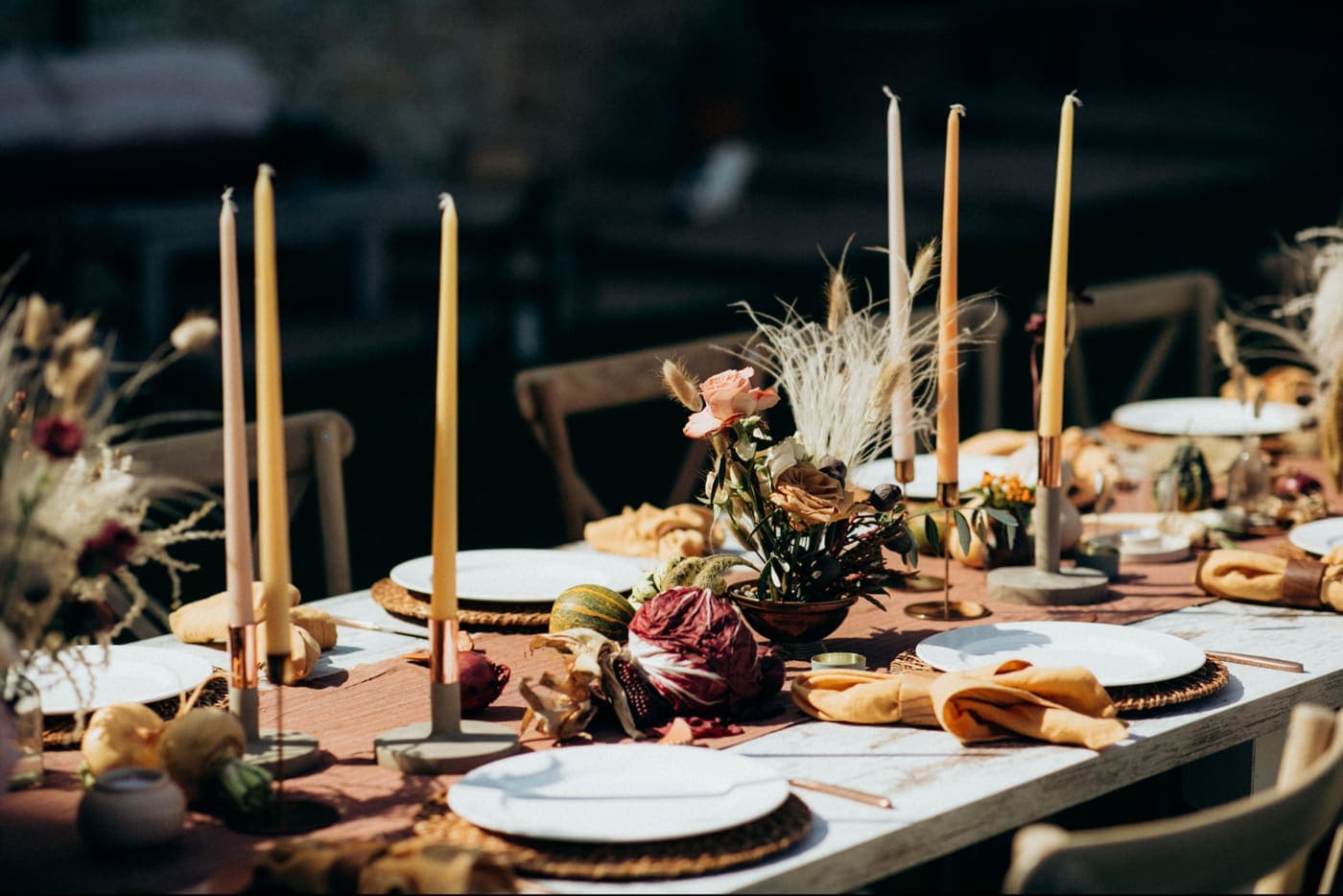
Planning a wedding isn’t hard because any single task is hard. Picking a florist or writing a guest list isn’t rocket science. It’s hard because dozens of small decisions are tangled together, and doing them in the wrong order costs you money, time, and a fair amount of sanity. Book a venue before you know your guest count and you’ll either pay for empty chairs or scramble to find a bigger room. Order invitations before the menu tasting and you’ll be reprinting inserts. Chase a florist in month one, when florists are usually the last major vendor booked, and you’ll make the decision with no color palette, no venue photos, and no idea what you actually need. Skip a step or do it out of order and the cost usually isn’t catastrophic on its own. It’s that the small frictions compound. A late guest count means a rushed catering order. A rushed catering order means a nervous final walk-through with the venue. None of that is fatal, but none of it is necessary either, and it’s the difference between a planning process that feels manageable and one that feels like a second job in the months before your wedding.
This guide is the whole thing in 22 steps, grouped into five phases that mirror how a wedding actually comes together: foundation, big vendors, look, details and paper, and the home stretch. Work top to bottom and each decision quietly makes the next one easier: a clear budget makes venue touring faster, a booked venue makes vendor outreach faster, and a firm guest count makes catering, invitations, and seating all click into place. You don’t need to finish a phase before starting the next one, but starting phase two before phase one is settled is how weddings get expensive and stressful. If you want the deeper version of any single step, the specific guides are linked throughout; this article is the map.
Phase 1: Lay the foundation (12+ months out)
Nothing else can really be booked well until these five are settled, because every one of them constrains everything that follows. Rushing this phase to get to the “fun” parts (flowers, dresses, cake tastings) is the single most common planning mistake, and it’s the one that’s hardest to undo later.
- Agree on a vision. Before any logistics, get aligned as a couple on the shape of the day: big or intimate, formal or relaxed, a single city venue or a weekend in the countryside. You don’t need a color palette or a Pinterest board yet. You need a shared direction, because vision disagreements surface later as expensive disagreements about venues and guest lists if they’re not resolved first.
- Set the budget. Add up every contribution (yours, your partner’s, and family’s if any is offered), ask directly rather than assume, subtract a 10% contingency you don’t touch, and divide what’s left across categories before you fall in love with anything. Start with how to budget for a wedding for a full breakdown and three worked examples at different price points.
- Draft a guest count. Even a rough number matters here, because it caps your venue options, sets your catering minimum, and drives more of the total budget than any other single variable. Build the list in tiers (must-invite, should-invite, would-be-nice) so you have an easy lever to pull if the number needs to come down later.
- Choose a date or season. A fixed date is simplest if you have one you’re attached to, but flexibility on season, day of week, or even month is real financial leverage. Off-peak dates routinely undercut peak-season pricing on venues and popular vendors, and a Friday or Sunday date can open up a venue that’s fully booked on Saturdays for a year.
- Book the venue. This is usually the single biggest line item and the decision everything else revolves around. Your date, your guest cap, your catering options, and often your décor budget all follow from it. Take these questions to every tour so you catch hidden fees, vendor restrictions, and rain plans before you sign anything.
Phase 2: Book the big vendors (9–12 months out)
Once the foundation is set, move quickly on the vendors who take exactly one wedding a day. They get claimed on popular dates nine to twelve months out, sometimes further ahead for the busiest weekends of the year. Waiting on these means settling for whoever is left, not whoever you actually wanted.
- Planner or coordinator. If you want one (full planning, partial planning, or just month-of coordination), hire early. A good planner pays for a chunk of their own fee in vendor relationships and negotiated pricing, and they can help with nearly every step below.
- Photographer & videographer. The thing you keep long after the flowers are gone and the cake is a memory. See what to know before hiring one for the questions on coverage hours, second shooters, and editing turnaround that actually matter, plus what photographers typically charge.
- Caterer. Unless your venue caters in-house, this is usually your second-biggest expense after the venue itself, and it’s priced per head, which is exactly why locking your guest count early matters so much for this step.
- Band or DJ. Popular acts and DJs book out a full year in advance for peak Saturdays in spring and fall. Ask to see or hear them perform live rather than relying only on a demo reel, and confirm they’ll act as informal MC for your timeline.
- Officiant. Especially important if you want a custom, personalized ceremony rather than a standard script. That takes lead time for consultations and writing. See officiant costs, explained for pricing by type and where you can reasonably save.
Phase 3: Build the look (6–9 months out)
With the big, single-a-day vendors locked and the venue’s style in hand, this phase is about everything guests will actually see and remember visually, and it’s where a firm budget allocation pays off, because every one of these categories scales smoothly up or down.
- Florist. Bring your palette, your venue photos, and a realistic number in mind before the first meeting. Florists can build a stunning arrangement at almost any budget once they know the real ceiling, but guessing wastes everyone’s time on proposals you’ll never book.
- Attire. Dress and suit shopping takes months once you factor in ordering lead time, multiple fittings, and alterations. A dress rarely fits off the rack, so budget both the months and a few hundred extra dollars for tailoring.
- Hair & makeup. Book the trial run at the same time you book the day-of service, not as an afterthought. It’s your one chance to adjust before the actual morning. See what beauty really costs for trial fees, on-location charges, and per-person pricing.
- Cake or desserts. Schedule a tasting, confirm delivery and setup logistics with your venue, and decide early whether you want a display cake, a full-service cake, or a dessert table. Each has different lead times and vendors.
- Rentals & décor. Tables, chairs, linens, lighting, and a tent if you need weather backup, whatever your venue doesn’t already provide. Confirm this list against your venue contract early; assuming something is included when it isn’t is a common late-stage budget surprise.
Phase 4: Details & paper (3–6 months out)
This phase is where the wedding becomes real to your guests: the first save-the-date lands in a mailbox, the website goes live, and the countdown genuinely starts to feel close.
- Save-the-dates & wedding website. Send saves roughly six to eight months out, longer if you expect significant travel or a destination guest list. See the best wedding website builders for where to host your details, registry links, and RSVP form.
- Registry. Set it up before the shower invitations go out, since guests will look for it the moment they RSVP to any pre-wedding event, not just the wedding itself.
- Invitations. Mail roughly eight to ten weeks before the wedding, with RSVPs due about three to four weeks out. That gap gives you real time to chase stragglers and hand a firm number to your caterer.
- Menu tasting & bar plan. Lock the food and drink selections and confirm exactly what drives your final headcount: allergies, kids’ meals, and vendor meals all need to be accounted for, not just adult guests.
- Transportation & hotel block. Arrange transport for the two of you, a guest shuttle if your venue is remote or parking is limited, and a room block at a nearby hotel for out-of-town guests. Block it early since room blocks fill up fastest at popular venues.
Phase 5: The home stretch (final weeks)
The last phase isn’t about booking anything new. It’s about tying off every loose thread so the day runs itself without needing either of you to manage it.
- Finalize the day. Confirm the timeline with every vendor individually, submit your final headcount to the caterer and venue, and finish the seating chart. Do this about two weeks out so small changes don’t cascade into last-minute chaos.
- Handle the last-mile items, then unplug. Marriage license, rings, vendor tips in labeled envelopes, an emergency kit, and a clear plan for who’s carrying what on the day, ideally a trusted friend or your coordinator, not you. Once that list is handled, step back and let the day happen; you’ve done the planning, and the day itself is for being present.
Frequently asked questions
How far in advance should we start planning? For a full-size wedding, twelve months gives you comfortable room to book in-demand vendors on your preferred date. It’s absolutely possible to plan a wedding in six months or less. You’ll just move faster through phases one and two and may have fewer options for the most popular vendors and venues.
What should we book first if we’re short on time? Budget and venue, in that order, every time. Everything else in this guide depends on those two decisions, and vendors need a firm date before they can even quote you.
Can we plan a wedding without a professional planner? Yes. This guide is built for exactly that. A planner or month-of coordinator helps most with vendor relationships and day-of logistics, but plenty of couples run the entire process themselves using a checklist like this one and a shared calendar.
What’s the most commonly underestimated step? Alterations and the final guest-count reconciliation. Both tend to happen later than couples expect, and both can shift the budget more than people plan for. Keep that 10% contingency specifically for moments like these.
How many vendors do we actually need to interview? Two or three per category is usually enough to compare pricing and personality fit without turning research into a part-time job. This is precisely the step Our Day shortens. Instead of searching and cold-emailing, you get up to six vetted, available matches per category delivered to you.
What if two steps genuinely have to happen at once? That’s normal, not a sign you’re behind. The phases describe the order things typically need to be settled by, not a strict week-by-week schedule. Plenty of couples are interviewing photographers and touring venues in the same month. Treat the numbering as priority, not a calendar: if you only have time for one call this week, make it the one earlier in the list.
Ready to skip the research and go straight to real options? Browse vendors in your state or tell us about your day to get started.